
BuddyPress helps you build any kind of community website using WordPress, with member profiles, activity streams, user groups, messaging, and more.
You can automatically install the BuddyPress plugin when doing a demo import or you can manually install the plugins from WordPress repository.
After BuddyPress is installed, go to WP Admin -> Settings -> BuddyPress to change plugin settings.
Components
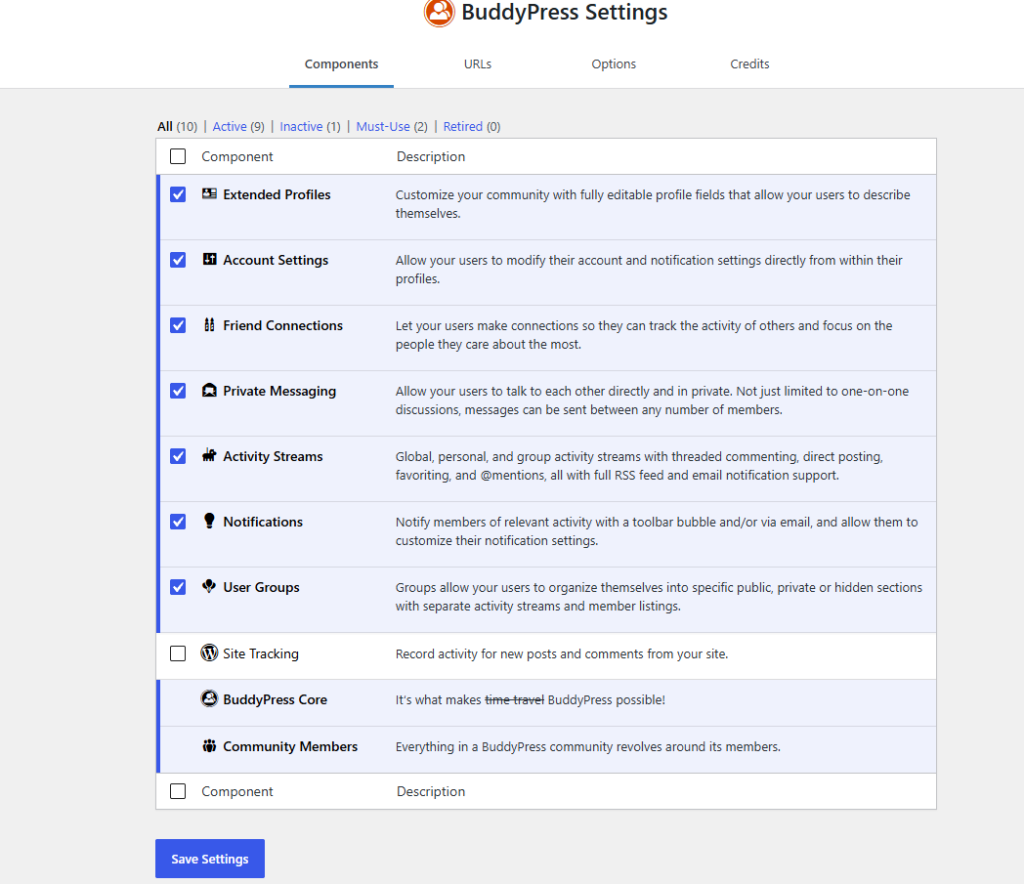
BuddyPress comes with several useful components, such as Friends, Groups, Activity, Notifications etc and you can see them in the components tab.
Urls
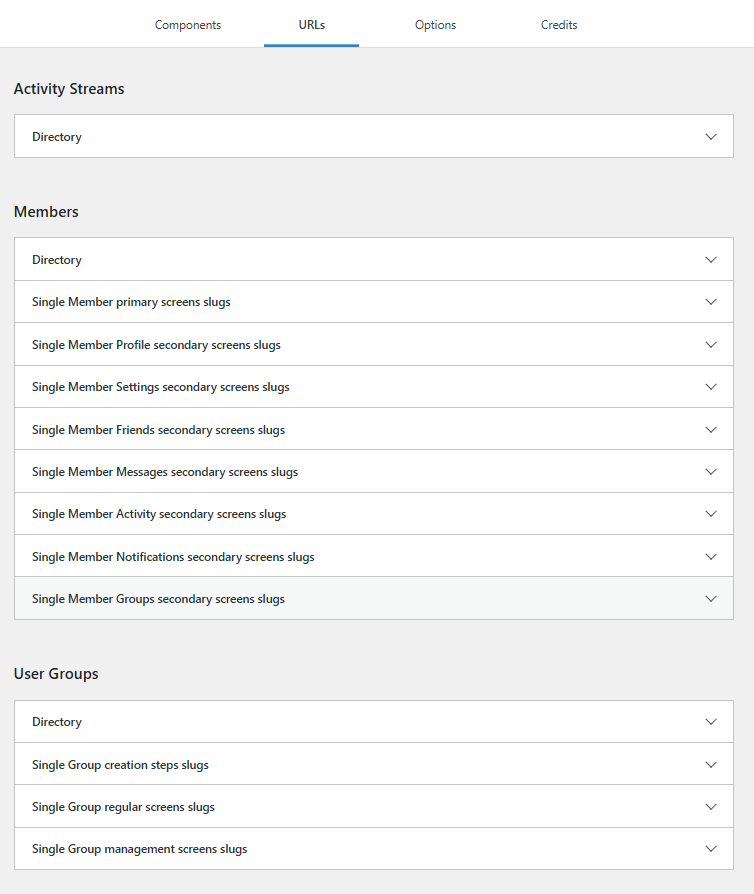
Since BuddyPress 12.0.0, BuddyPress pages are deprecated. BuddyPress now automatically assigns default URL slugs such as (/members/, /activity/, and /groups/) based on the active components you have enabled within your site.
Activity: shows wide activity from users. This includes messages, comments, friend requests, groups activity, etc
Groups: used to show the Groups Directory. You can enable users to create groups from Settings > Buddypress > Components
Members: Renders all of your site members.
BuddyPress Profile Fields
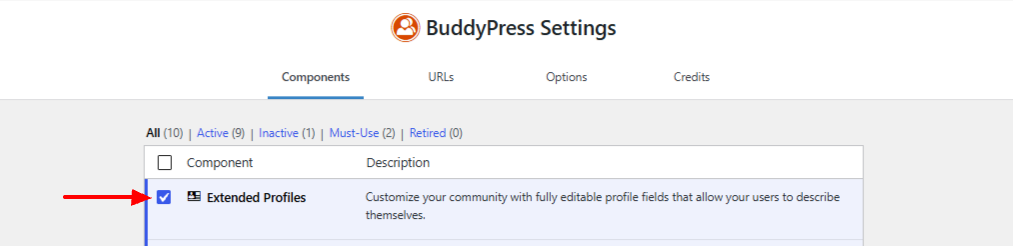
You can create your own profile fields for users. Make sure to enable the Extended Profile component in Settings > BuddyPress section.
Fields can be arranged into groups, and you can define your own groups to show on the user profile edit page.
Note: Fields you add to the Base profile group will show on the Register page.
